



Award
First Place, GeneralTech Track — 2025 Tech Innovation Jam, University of Michigan Ross School of Business
Top 5 Overall Finalist — Selected out of 72 competing teams across all event tracks
Overview
Many fashion designers spend 40+ hours per collection on manual flat sketches, and they have to rework across multiple files for every revision. The design process is time-consuming and tedious.
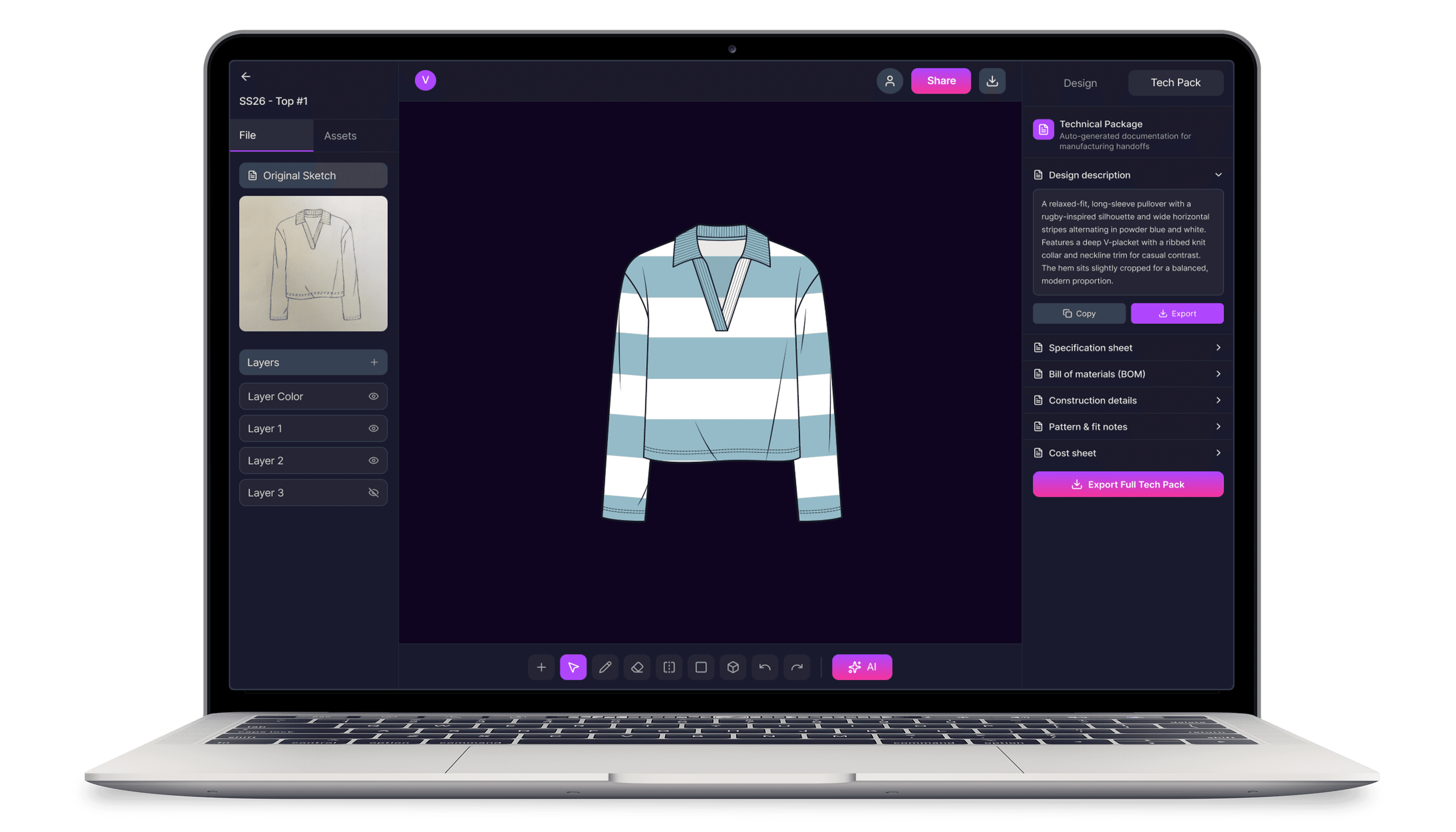
FashionFlat AI is an AI-powered platform that streamlines the fashion design workflow by transforming rough sketches into editable technical flats and automatically producing the technical packs needed to move from concept to production.
Duration
October 2025 - November 2025
Team
Victor Fang
Wonji Seo
Joseph Winkler
Alexis Chung
Tools
Figma
FigJam
Adobe Photoshop
Adobe Premiere Pro
Process

1. Research
User interviews
Persona
User Journey Map
2. Design
Low-Fidelity Wireframes
High-Fidelity Prototype
3. Final
Product Demo
Reflection
Next Steps

User Interviews
To uncover the core challenges fashion designers face, our team conducted user interviews and mapped our data using an affinity wall. This process revealed three primary workflow pain points.

Paper-to-Digital Hurdles
It is time-consuming to turn a rough sketch into a digital piece. Designers must juggle scanning software, vector tools, and CAD programs, breaking their creative momentum.

Messy Revision Cycles
It is challenging to make revisions because they often make sketches look messier, and designers may end up having to start over. This lack of version control wastes hours of manual iteration.

Tedious Spec Documentation
Documenting a design specification can be a tedious process. Tech packs and manufacturer instructions are frequently managed via scattered emails and spreadsheets, leading to production delays.
Persona
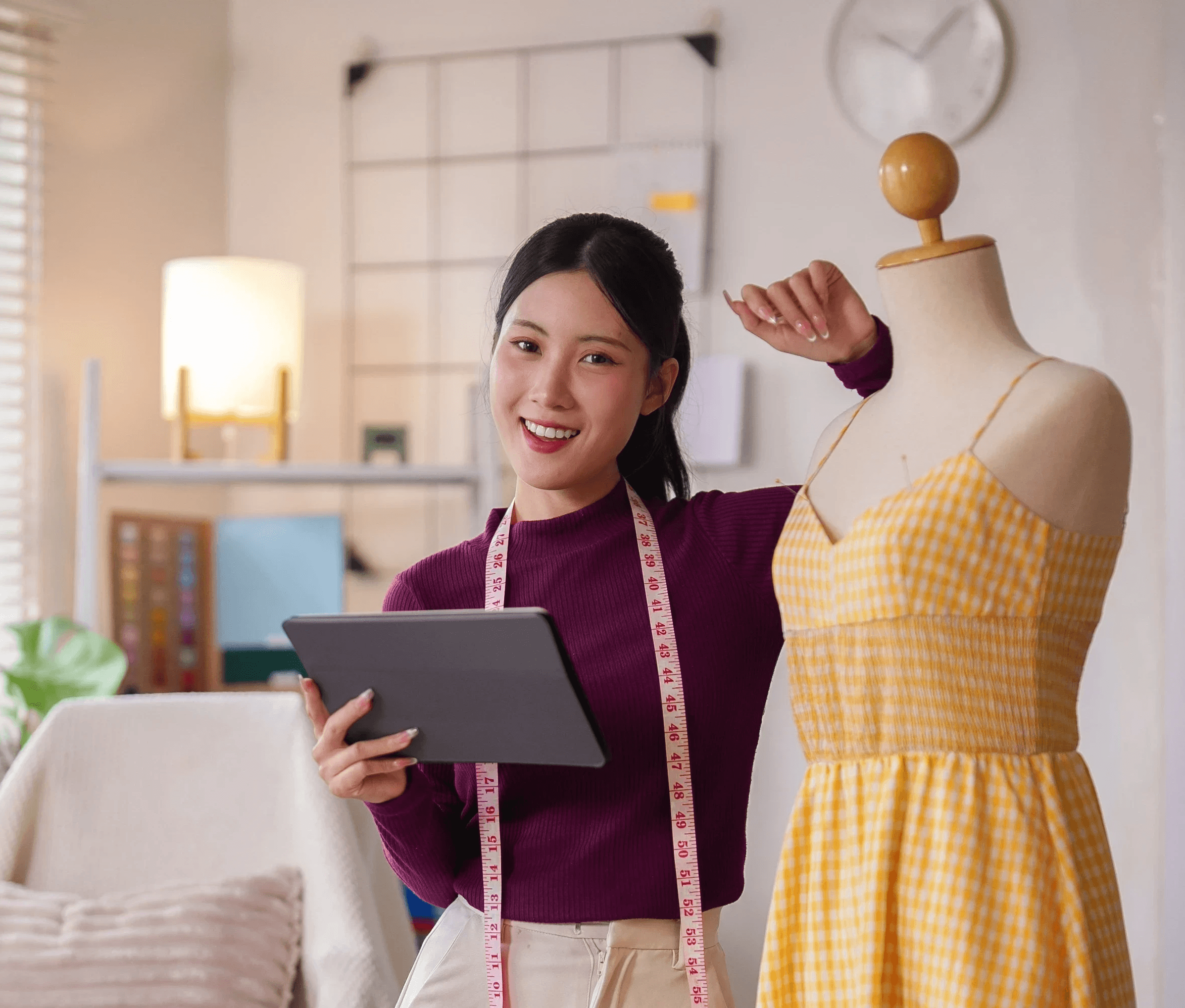
By analyzing common behavioral patterns across our research, we developed a primary persona to represent the daily workflows and friction points of fashion designers. This archetype keeps real-world needs at the center of every feature decision.



Frustrations
Redrawing everything by hand onto a computer takes a long time.
Modifying physical drawings gets messy fast, forcing her to start over.
Manually building out detailed tech packs is inefficient.
Goal
Turn rough concepts into digital vector sketches instantly.
Auto-generate tech packs without spending hours on data entry.
User Journey Map
Guided by our persona, we mapped the user experience across four key stages of the design process. Breaking down this workflow allowed us to see exactly where users experience friction and discover clear opportunities to improve the product.

Low-Fidelity Wireframes
We began our design process by analyzing existing services, including Adobe Illustrator, Raspberry AI, and Mercer Design, to uncover industry standards and gather visual inspiration.
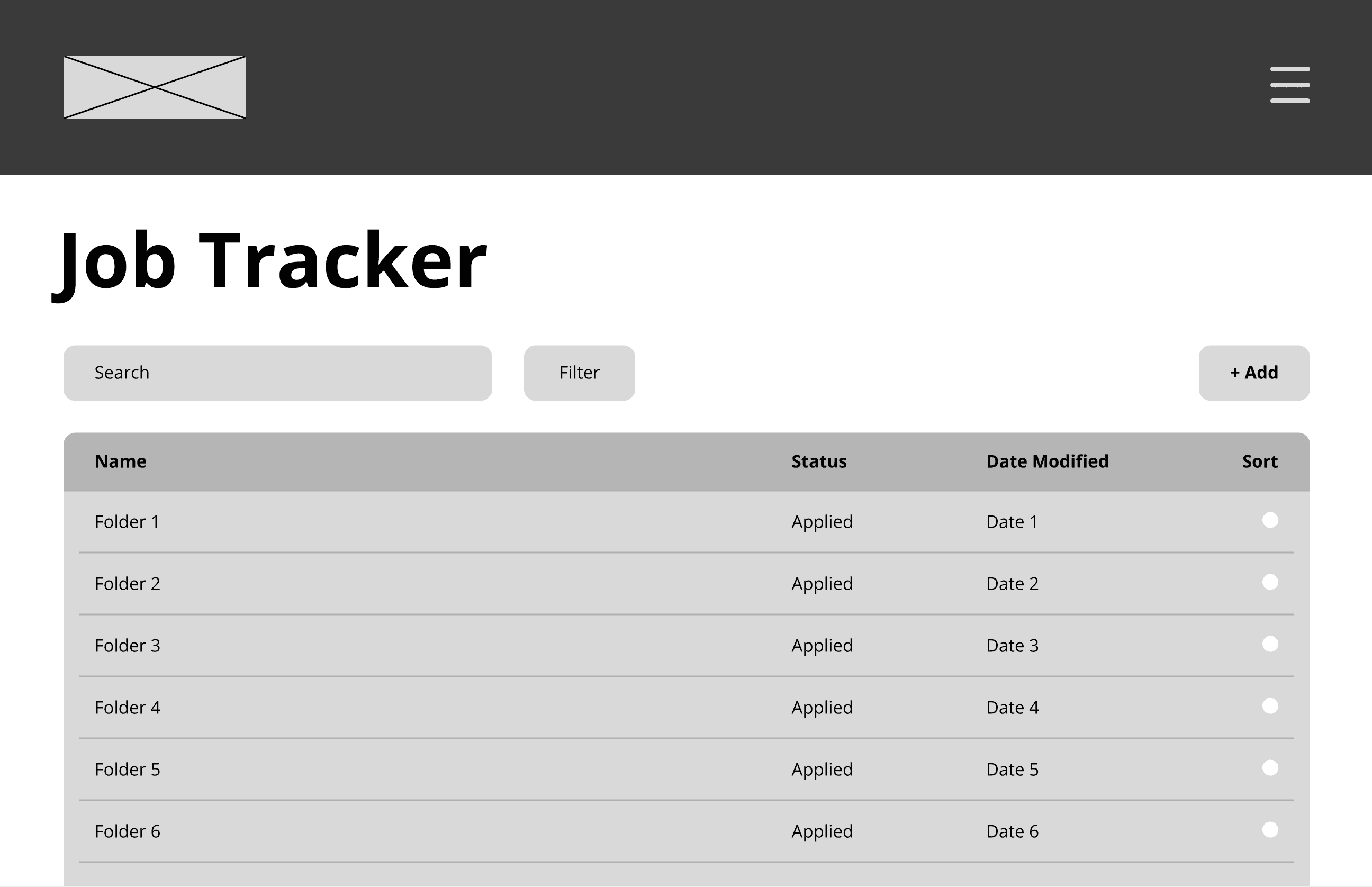
We then translated our insights into low-fidelity wireframes, establishing a seamless end-to-end workflow across four core screens:
Landing Page: A clean, focused entry point enabling users to instantly upload or scan their physical sketches.
Dashboard: An organized asset manager featuring folder structures to track design files and ongoing projects.
Design Editor Workspace: A specialized canvas providing traditional vector layout tools alongside integrated asset panels.
AI Robot: A conversational sidebar modal allowing users to rapidly generate and expand design elements via text prompts.




High-Fidelity Prototype
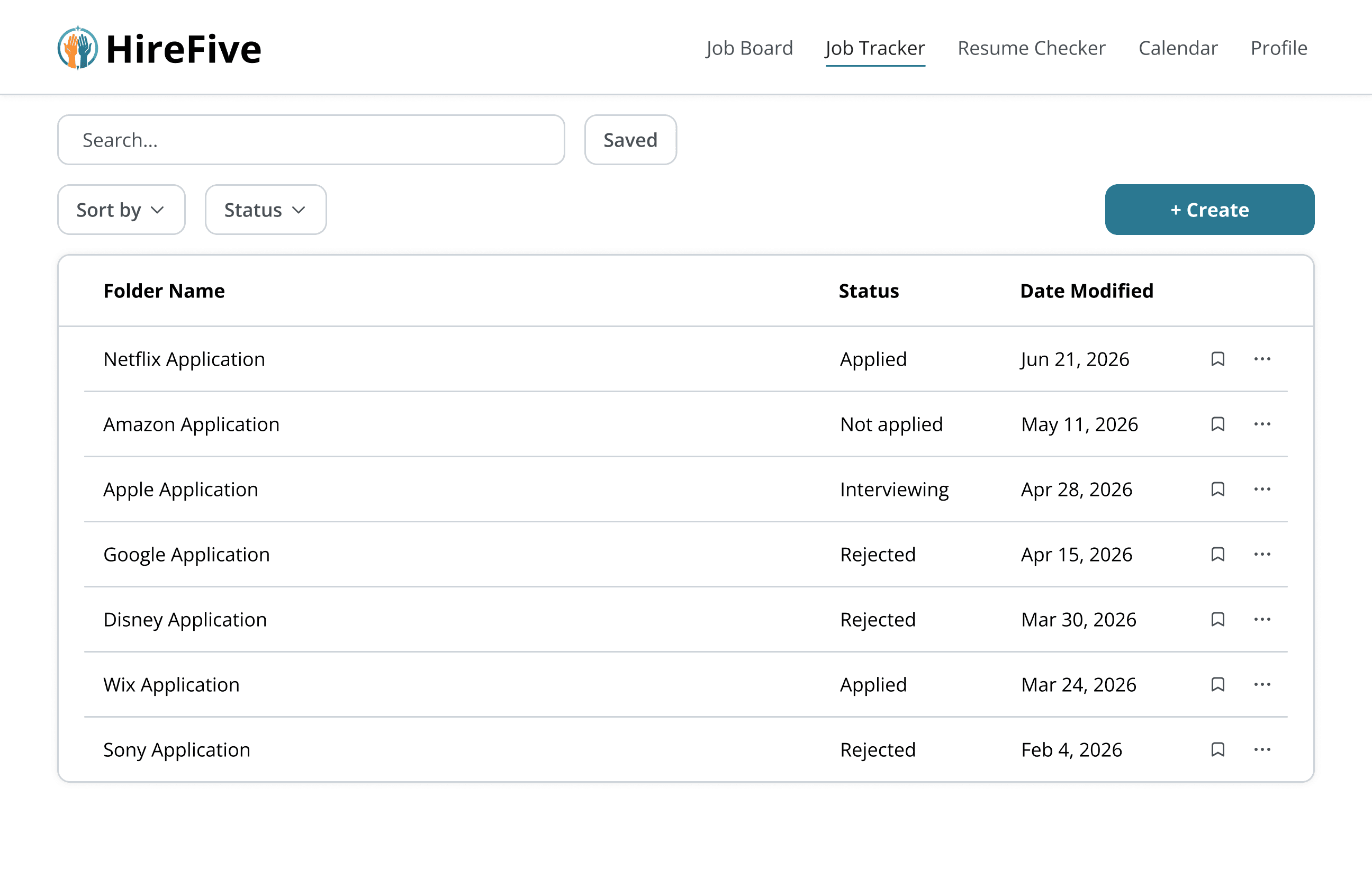
We advanced our wireframe concepts into a high-fidelity prototype that simulates the FashionFlat AI ecosystem.
To minimize users' manual efforts, we focused strictly on essential tools tailored to fashion workflows and integrated an AI assistant to quickly generate design elements.



Product Demo
After finalizing the high-fidelity prototype, we used Adobe Premiere Pro to create a video demo showcasing FashionFlat AI's four key features:
Sketch Digitization: Converting a hand-drawn sketch into a clean digital flat sketch.
Editor Workspace: Making precise micro-adjustments directly to lines and vectors on a drawing canvas.
AI Assistant: Expanding designs and creating custom elements through conversational text prompts.
Auto-Generated Tech Packs: Compiling technical specifications into a production-ready file for instant download.
Reflection
Working as a team to build FashionFlat AI really opened our eyes to how much tedious and manual work goes into a designer's day. Looking back at our process, we walked away with two core takeaways:

Control Over Automation
Our research showed that while designers love the speed of AI generation, they are protective of their personal creative side. Integrating the AI assistant alongside a manual Editor Workspace struck the perfect balance between speed and creative freedom.

Streamlining Technical Hand-Offs
Turning a creative sketch into a design specification sheet is usually a tedious, multi-step chore. By making it effortless to generate a tech pack straight from the digital workspace, we found that smoothing out this hand-off provides massive relief for the user.
Next Steps
As we look toward the future of FashionFlat AI, we outlined the following two key areas of focus for our next development cycle.

Usability Testing
Run targeted testing sessions with professional fashion designers to evaluate the speed of the AI assistant and look for hidden friction inside the vector editing canvas.

Real-Time Collaboration
Expand the Editor Workspace to support simultaneous co-editing, allowing design teams and manufacturers to update sketches and tech packs together live.

